


Welcome to the Weekend.
I hope you’re taking some time to reflect on the last year and set your intentions for next year. If so, you may want to check out the framework I use. It generally takes about 2 hours to get through and is probably the most important practice I have annually.
As an end of the year recap, you’ll see some of my favorite media and articles of 2025 below. Enjoy!
Prime Number
270,350 - In 2025 the Weekend Briefing audience grew 17.6% to 270,350 readers. Thanks for continuing to show up and share the briefing with your friends!
Best Media of 2025
Best Podcast: Acquired

It will come as no surprise that my favorite podcast of the year is Acquired. I’ve listened to over 100 episodes this year, many of them twice and I even attended their SOLD OUT live performance at Radio City. It’s become my go-to source for business strategy wisdom, and I’ve applied countless lessons to my own practice. Hosted by Ben Gilbert and David Rosenthal, Acquired tells the stories and strategies behind great companies. It’s the #1 technology show on Apple Podcasts and Spotify, with each episode reaching over one million listeners. The Wall Street Journal calls it “the business world’s favorite podcast,” and that’s no exaggeration. What sets Acquired apart is its commitment to depth. These aren’t quick hit episodes. They’re better described as conversational audiobooks, often running three to four hours as they unpack every layer of a company’s journey from founding to dominance. Acquired
Best Podcast Episode: Trader Joe’s
Trader Joe’s breaks every rule of modern retail. No e-commerce. No delivery. No sales, coupons, or loyalty programs. They stock just 4,000 SKUs versus 50,000+ at typical supermarkets. Their parking lots are notoriously terrible, and they’re constantly out of your favorite items. Shoppers brave long lines and cramped aisles while overly friendly employees in Hawaiian shirts try to chat them up. Everything about the experience seems designed to drive modern consumers away. And yet they generate over $2,000 per square foot in sales, double Whole Foods and nearly 4x the industry average. Americans are obsessed with them. This episode tackles a fascinating question: how did a company that so steadfastly refuses to participate in the 21st century build the most beloved grocery chain in America? The answer involves brilliant product strategy, cult-like culture, and a counterintuitive bet on scarcity. Acquired
Best Book: Like a Wave We Break
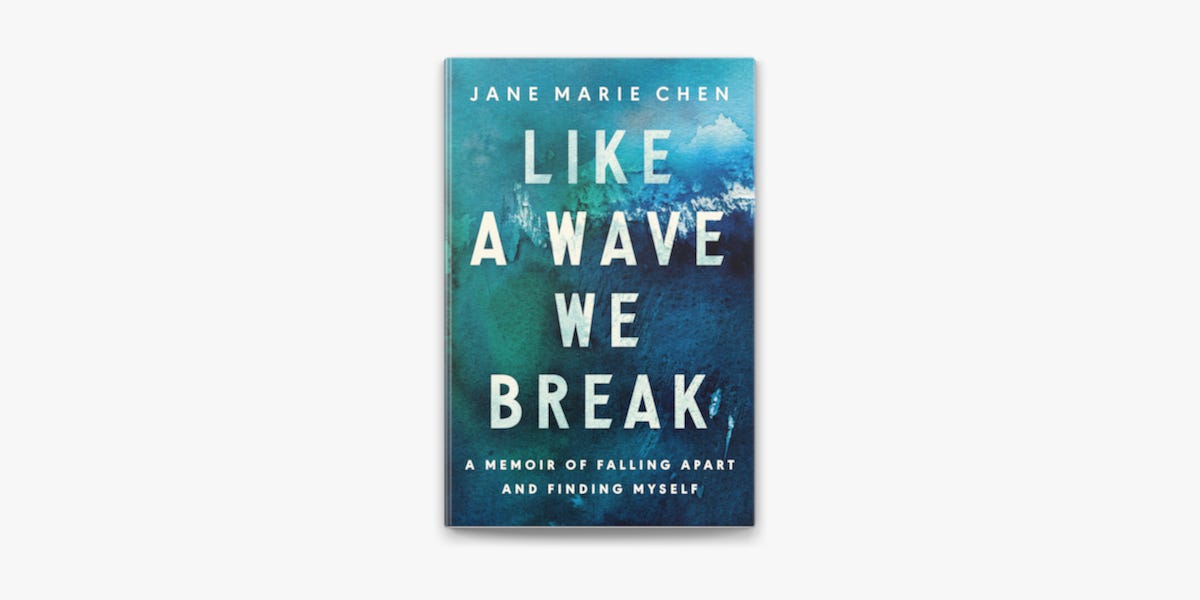
On paper, Jane Chen was the embodiment of success. A Harvard and Stanford graduate, she co-founded a company that developed a groundbreaking incubator saving hundreds of thousands of newborns worldwide. Her work earned recognition from presidents and pop stars. Yet underneath it all, she was burning out, consumed by self-doubt and a relentless need to prove herself. Then Embrace collapsed. Jane lost more than a dream. She lost the identity she had built her life around. Feeling utterly broken, she embarked on a global quest for healing, from silent retreats in the Indonesian jungle to sessions with world-renowned therapists to a frog poisoning ceremony. Her search ultimately led her to confront the one thing she had spent a lifetime avoiding: the trauma of her upbringing as a first-generation Taiwanese American. This memoir is candid, funny, and wise, offering a powerful invitation to embrace the messy truth of who we are. I did an interview with Jane here. Like a Wave We Break
Best Album: SABLE, fABLE
This was a tough call given how much I enjoyed Taylor Swift’s Life of a Showgirl, but I have to give best album to Bon Iver. Their fifth studio album, SABLE, fABLE, released on April 11, 2025, marks a radiant turning point for the project. Moving away from the “man-in-a-cabin” isolation that defined Justin Vernon’s early career, the record is a luminous celebration of healing and newfound connection. For the first time, fans finally get to hear Vernon sounding genuinely happy. The album was conceived as a journey from shadow into light. The sparse, confessional SABLE EP gives way to the soul-drenched vibrancy of the fABLE tracks. It’s a record about emerging from darkness, and you can feel that transformation in every layer of the production. A stunning evolution from one of music’s most emotionally intelligent artists. SABLE, fABLE
Best Track: The Older I Get
Released in October 2025, “The Older I Get” by Missouri singer-songwriter Bryan Andrews became a viral sensation for its unflinching social commentary. Shifting away from traditional Nashville tropes, the track delivers a raw critique of systemic issues, including the human impact of ICE raids and the fight for a living wage. Its most striking lyric, “I wish the Christians tried to be a little more like Jesus,” captures Andrews’ challenge to modern religious and political hypocrisy. The song’s commercial performance was swift, peaking at #1 on the iTunes Country charts and accumulating millions of streams. Reaction has been intensely polarized. While some traditional listeners dismissed it as “woke,” it earned massive acclaim on platforms like Reddit for its truth-to-power message. The track has established Andrews as a leading voice in the rising progressive country movement. I wrote a response to it here. The Older I Get
Best Newsletter: Acquired Briefing

I read a lot of newsletters, but I’ll be self-serving here and say my favorite was one I’ve been building since June: Acquired Briefing. I clearly have a newsletter problem. I’m now up to three weekly publications, and this one is a newsletter about a podcast. Ridiculous, I know. It transforms the brilliant insights from Ben Gilbert and David Rosenthal’s legendary Acquired podcast into actionable written briefings. Each issue distills the most valuable business lessons, strategic frameworks, and historical insights from their deep-dive company stories. If you love Acquired but can’t always commit to a four-hour episode, or if you want a written reference to revisit the key takeaways, this newsletter delivers exactly that. It’s become a useful resource for founders and operators who want to have written notes to refer back to. We’re kicking off the new year with a bang. The first episodes next year will be: Meta, Rolex, IKEA, Mars, Porsche, Microsoft. Acquired Briefing
Best Articles of 2025
Dirtbag Billionaire
I sat down with New York Times journalist David Gelles to discuss his new book “Dirtbag Billionaire,” which chronicles how Yvon Chouinard built Patagonia by embracing contradictions that defy conventional business wisdom. The defining moment came in the early 1960s when Chouinard stopped selling pitons—his company’s main product—because they were damaging Yosemite’s granite walls, choosing environmental responsibility over short-term profits. After experiencing devastating layoffs during “Black Wednesday” in the late 1980s, Patagonia permanently changed its approach to maintain cash reserves and deliberately restrain growth to avoid future mass firings. The company embodies unresolvable paradoxes, running “Don’t Buy This Jacket” campaigns while needing customers to buy gear, and pursuing both profitability and environmental activism simultaneously. In 2022, Chouinard gave away his $3 billion company through an unprecedented structure that preserved its independence while directing all profits to environmental causes, proving that embracing contradictions between profit and purpose can be both productive and influential. You can watch the entire interview to learn more about Chouinard’s remarkable journey and the lessons it offers for building values-driven companies. YouTube (40 minutes)
Asking the Right Questions
In a world where artificial intelligence can instantly provide answers, the true competitive advantage lies in knowing which questions to ask. While most leaders understand that interrogative skills matter, research reveals five distinct types of questions that can revolutionize strategic decision-making: investigative questions that dig deep into what’s known, speculative questions that explore what’s possible, productive questions that determine what’s needed, interpretive questions that make sense of findings, and subjective questions that uncover emotional undercurrents. The art of leadership increasingly depends not on having all the answers but on asking these different types of questions at the right moment, as illustrated by Nvidia CEO Jensen Huang’s evolution to spending entire days primarily asking questions rather than providing solutions. Most crucially, the questions that derail organizations are often the ones left unasked — those that don’t naturally arise from our expertise, habits or comfort zones. Harvard Business Review (23 minutes)
The Wrong Definition of Love
The modern definition of love has it completely backwards. We’ve turned love into a transaction where we seek to feel good about ourselves rather than genuinely caring for another person. Today’s popular understanding focuses on being “seen” and understood, but true love is actually about self-abnegation and active service to someone else’s flourishing. Our therapeutic culture has replaced the ideal of pouring yourself out for another with protecting yourself from others, producing a generation of people too self-focused to experience real intimacy. The paradox is profound: you don’t learn to love yourself first and then love others. You discover your own lovability by observing yourself in the act of genuinely loving someone else. NYT (7 minutes)
The Asexual Revolution
Young men have lost interest in having sex. Over 60% of young men today have little to no interest in sex. Think about that for a second… More than half of young men don’t want to have sex. There’s no clear cause, but it’s this dramatic shift likely stems from multiple factors including: 1) Widespread pornography consumption that normalizes unrealistic behaviors, making real-life encounters seem boring by comparison, and contributing to a 26% erectile dysfunction rate among men under 40. 2) Dating apps, rather than increasing connections, have created overwhelming environments where the good looking people are inundated with opportunity and the rest of men see little opportunity. 3) The prevalence of young adults living with parents further complicates intimate relationships. The concerning statistics show sexual activity at a 30-year low, with 28% of adults aged 18-30 reporting no sexual activity in the prior year, suggesting profound societal implications that warrant serious attention. Wit & Wisdom (10 minutes)
Falling Elites Fuel Revolutions
The most dangerous people in society aren’t the desperately poor—they’re the college-educated children of wealth who expected to inherit their parents’ status but didn’t. Fewer than four in ten kids born into the richest fifth of American households stay there, and this downward mobility among the privileged is the psychological fuel behind modern progressive activism, from Occupy Wall Street to the lionization of Luigi Mangione. History reveals that nearly every major revolutionary leader—from Robespierre to Lenin to America’s founders—was a well-educated, ambitious person close enough to power to see its flaws but excluded enough to burn with resentment. The cruel irony is that while upward mobility built America’s mythology, downward mobility among elites armed with degrees, platforms, and cultural fluency may be what tears it apart, as their rage at falling short of inflated expectations gets channeled into tearing down those just one rung higher. Rob Henderson’s Newsletter (9 minutes)
Saharan Railway
The world’s most extreme commute involves clinging to a 1.8-mile freight train crawling across the Sahara Desert for survival rather than convenience. This iron beast connects Mauritania’s mining heartland to the Atlantic coast, serving as both the nation’s economic lifeline and the only transportation option for desert communities who literally hop aboard moving cargo cars, where daytime temperatures often exceed 40°C and deaths from falls are common. The railway transforms from industrial necessity into human drama as passengers navigate sandstorms, scorching heat and precarious perches atop iron ore cars. What emerges is a stunning portrait of how infrastructure designed purely for commerce becomes a vital artery for human connection across one of Earth’s most unforgiving landscapes. Watch National Geographic’s short film This Sahara Railway Is One of the Most Extreme in the World to experience this incredible journey. National Geographic (13 minutes)
Wallace & Gromit’s Breakfast Machine
Could Wallace & Gromit’s wildly impractical breakfast contraption actually work in the real world? One determined engineer brought this beloved animation sequence to life through remarkable ingenuity and precision timing. The recreation begins with the creator dramatically falling out of bed directly into a waiting pair of trousers before landing perfectly seated in a chair, followed by automated sleeves and vest placement in faithful homage to the original. Most impressively, he mastered what he called “probably the hardest part of all” — the physics-defying feat of launching a spoonful of jam through the air to intersect perfectly with toast mid-flight after ejection from a toaster. Through countless attempts and calibrations, this passion project transforms whimsical cartoon physics into astonishing reality, delighting fans with its “cracking toast” finale that would make Wallace himself proud. Joseph’s Machines (2 minutes)
Should We Work Together?
Hi! I’m Kyle. This newsletter is my passion project. When I’m not writing, I run a law firm that helps startups move fast without breaking things. Most founders want a trusted legal partner, but they hate surprise legal bills. At Westaway, we take care of your startup’s legal needs for a flat, monthly fee so you can control your costs and focus on scaling your business. If you’re interested, let’s jump on a call to see if you’re a good fit for the firm. Click here to schedule a one-on-one call with me.
Weekend Wisdom
By three methods we may learn wisdom: First, by reflection, which is noblest; Second, by imitation, which is easiest; and third by experience, which is the bitterest. - Confucius