

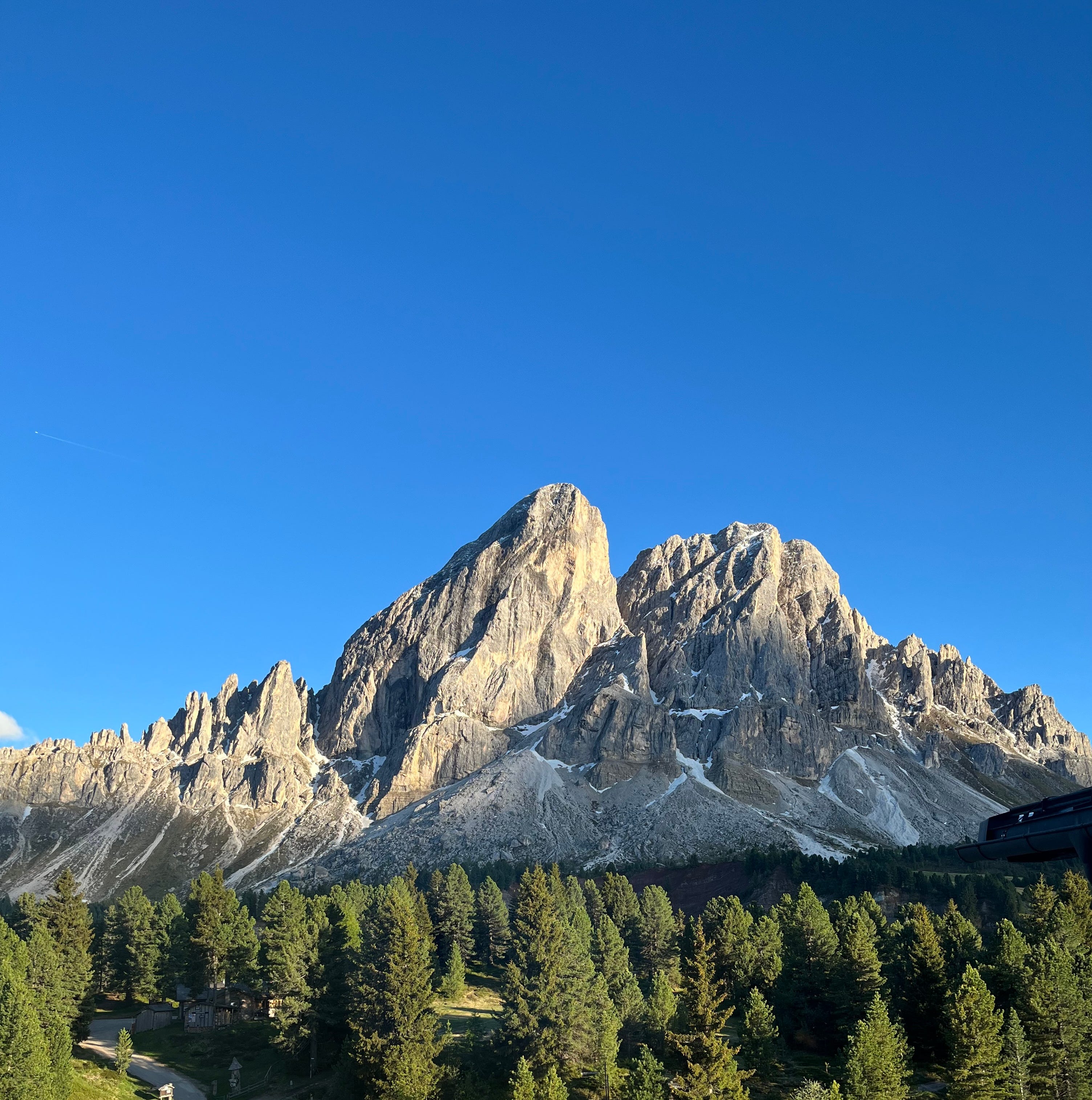
Every evening on the trail followed the same improbable script. We stumbled off the mountain dirty, tired and proud, and within 30 minutes we were showered up and have an Aperol Spritz in hand and on your way to a three-course dinner and a warm bed. The next morning, we laced up and did it again.
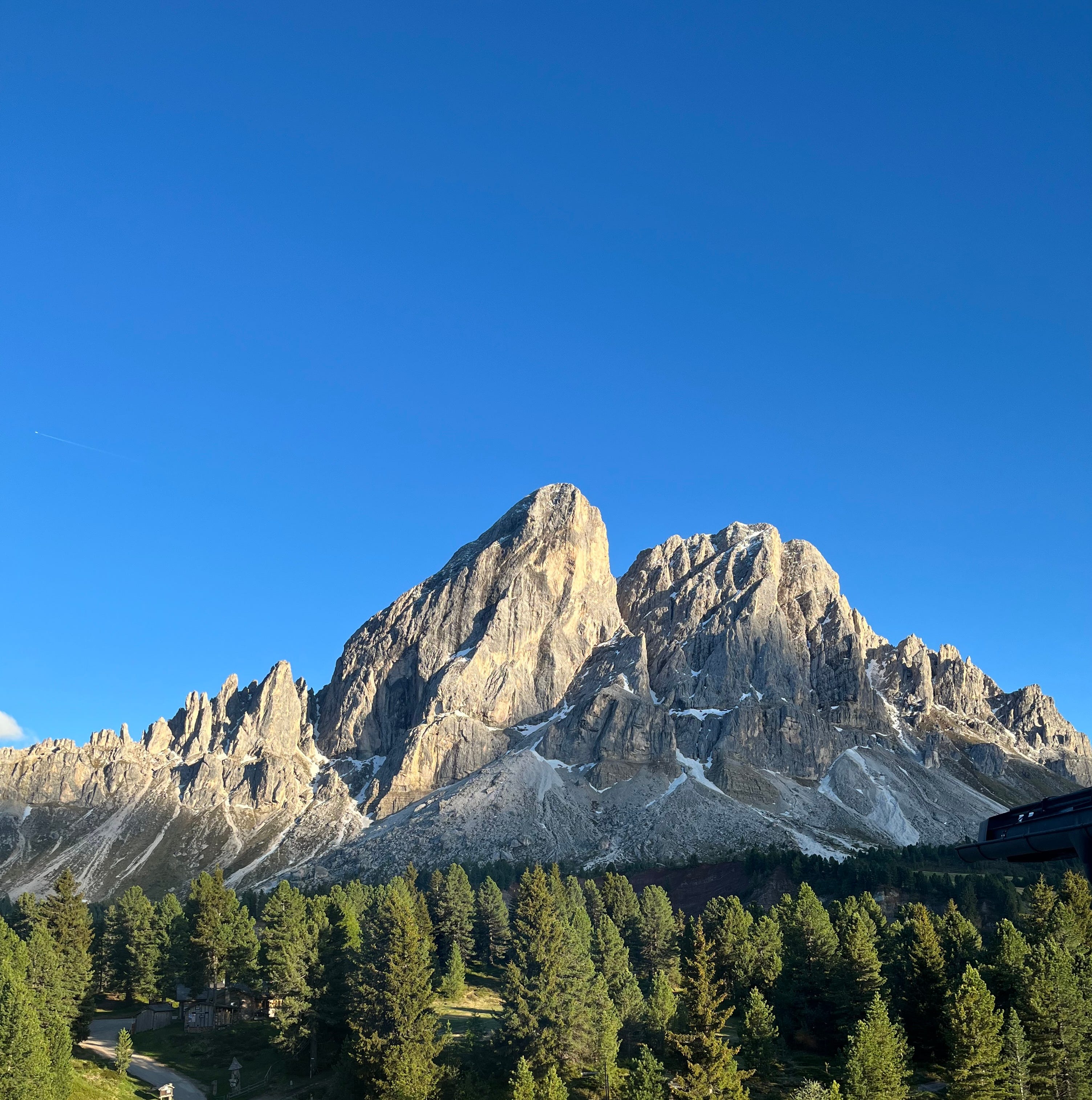
This is South Tyrol, the northeastern corner of Italy, a few hours from Venice by train, where the language is German, the food is Austrian, and the mountains are among the most dramatic on the continent. The Dolomites rise here as sheer vertical limestone walls, flat-topped and bone-white, thousands of feet straight up from soft green valley floors. It is a landscape that demands to be moved through, not just looked at.
The best way to move through it is a four-day hut-to-hut circuit. Some trips are an adventure. Some trips are a retreat. This one is both, and neither cancels the other out. It is, definitely one of the best trips I’ve done.
Hut-to-Hut
I love backpacking. A Multi-day backpacking trip in the wilderness is one of my favorite things to do. But typically the adventure comes with a tax, and the tax is the pack. Tent, sleeping pad, stove, fuel, bear canister, four days of food. You walk out the door with 45 pounds on your back, and everything downstream of that weight is harder. You move slower, fatigue faster, wear heavier boots, eat freeze-dried meals, and break camp in the cold rain with wet hands. The adventure is real, but so is the grind.
European hut-to-hut hiking removes the tax entirely. You go with a 25-liter daypack, trail runners, and snacks. The lighter the pack, the faster the pace, the better the shoes, the better the day.
It also opens the trail to everyone. We passed couples in their seventies moving steadily through the passes, families with young children, parents with infants in carriers. The full range of human ages, all sharing the same circuit. That is not what the American backcountry looks like, and the difference is infrastructure. When the barrier is a 45-pound pack, a lot of people reasonably conclude the mountains aren’t for them. When the barrier is a 25-liter daypack and a reservation, the mountains are for almost everyone.
The word “hut” covers a wide range of accommodations. At the basic end, it means a bunk room, shared bathrooms, and a kitchen sending out simple alpine meals. That is enough. You are warm, dry, fed, and off your feet, and after a hard day on trail that is not a small thing. You don’t pitch a tent in the rain. You don’t boil water for a freeze-dried meal at altitude. You sleep in a real bed with a pillow and a blanket, your boots dry by morning, and there is a dining room where hikers hang out and compare notes on the day.
At the high end, some huts are essentially mountain hotels: private rooms, ensuite bathrooms, multi-course dinners with a real wine list, saunas, hot tubs, and breakfast buffets with local cheese and freshly baked bread. Somewhere in that range is the right trip for almost anyone. The Europeans have figured out how to blend adventure and civilization at altitude, and I’m here for it.
Via Ferrata
Via ferrata means “iron road” in Italian. Beginning in World War I, Italian military engineers bolted steel cables, iron rungs, and wooden ladders directly into the faces of Dolomite cliffs to move troops through terrain that would otherwise require full mountaineering equipment. The infrastructure stayed after the war, was expanded, and eventually became one of the defining recreational activities of the Dolomites. From a distance, a via ferrata route looks like something only a climber would attempt. Steel cables run up a near-vertical rock face, the exposure drops away below, and the summit seems unreachable by any normal means.
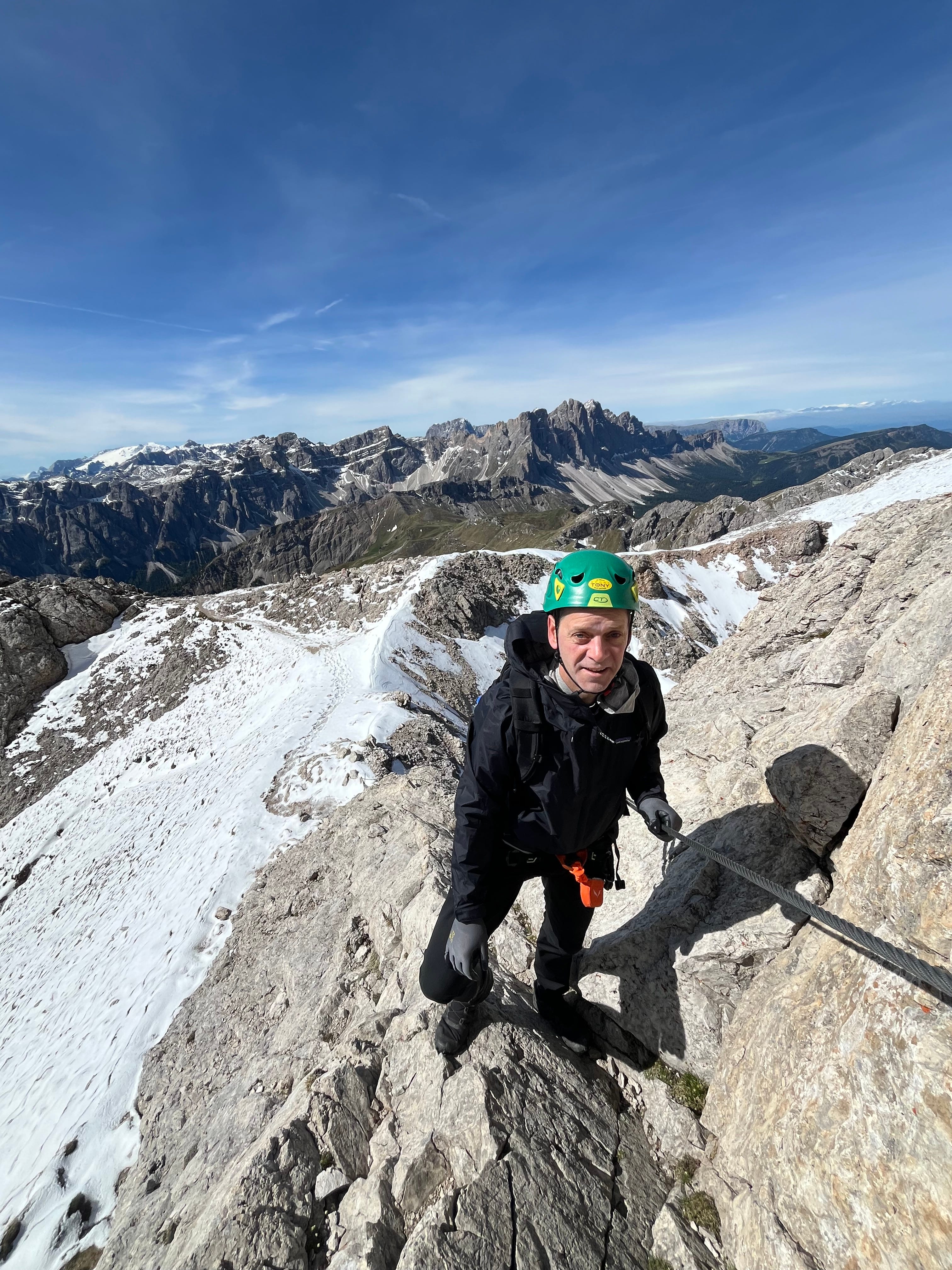
A via ferrata sits somewhere between a steep, exposed hike and a full rock climb. It is low-level climbing with high consequences, where a slip without protection would mean a very long fall. But the protection is the point. A fixed cable runs the length of the route, and you clip into it with a harness and a Y-shaped lanyard with a carabiner on each arm. Both clip onto the cable, and one stays live past every bolt. You are attached to the mountain at every moment, without the complexity of setting anchors and roping up the way a traditional climb requires.
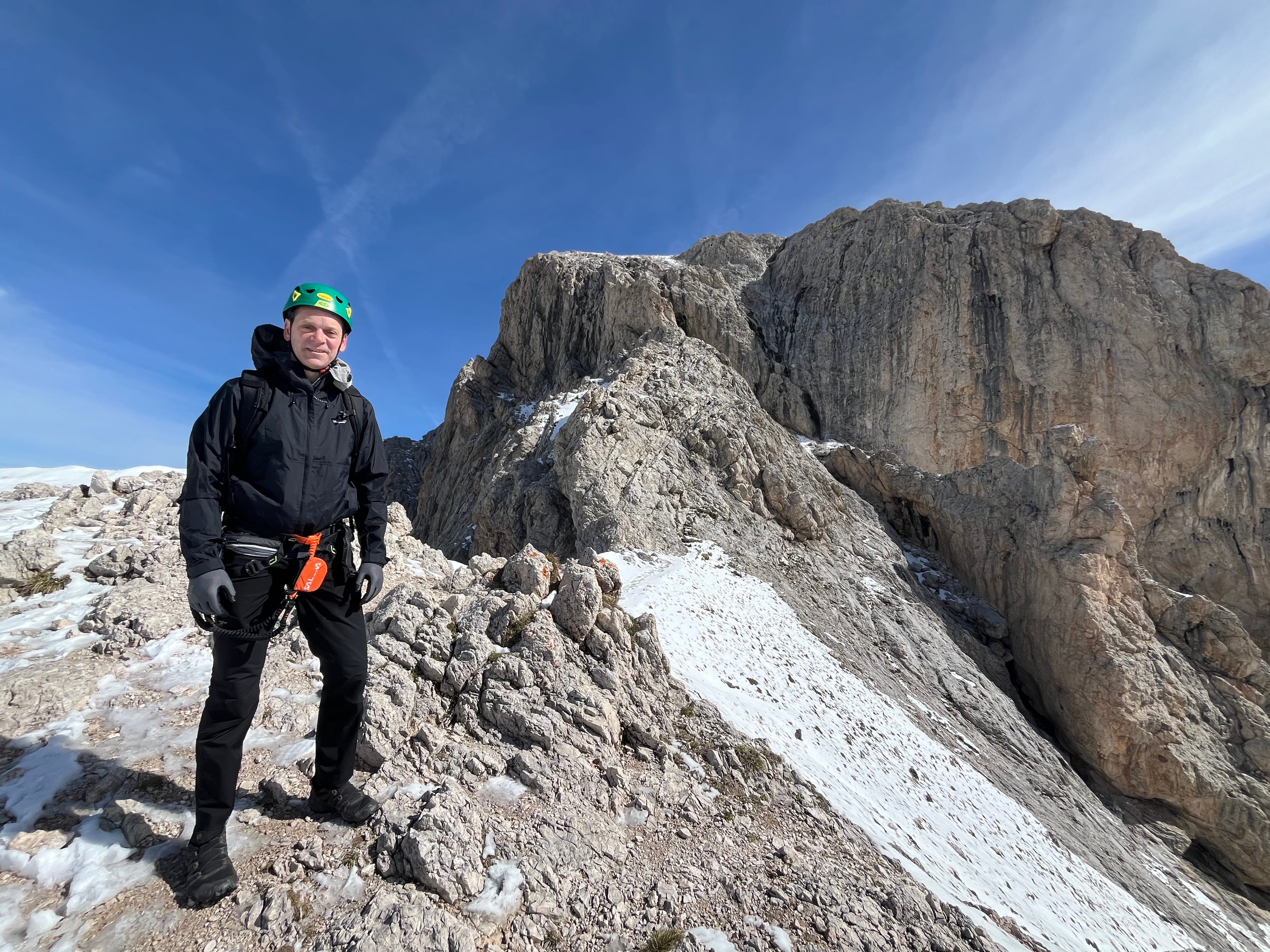
Standing at the base of the cables on Sass de Putia, 9,400 feet up, harness on and looking at the summit block above me, I was genuinely intimidated. This is considered a beginner via ferrata, a “baby” route, a good starter. It still looked nearly vertical with serious exposure on all sides. We had hiked a long way to get there and we had the gear, so the decision was to clip in and see. I gave it maybe fifty-fifty odds that we’d turn around before the top.
By the second or third cable, I had a realization: this is fun.
The fear is mostly a trust problem, and once you understand the system, the trust comes quickly. Then the mechanics do something more surprising. They give your mind something specific to focus on. Slide, clip, clip, slide. One bolt at a time. That narrow focus crowds out everything else, including the drop below your heels. The fear doesn’t disappear so much as it gets displaced. By the third or fourth bolt you are moving in rhythm, and somewhere in that rhythm the whole thing becomes genuinely enjoyable.
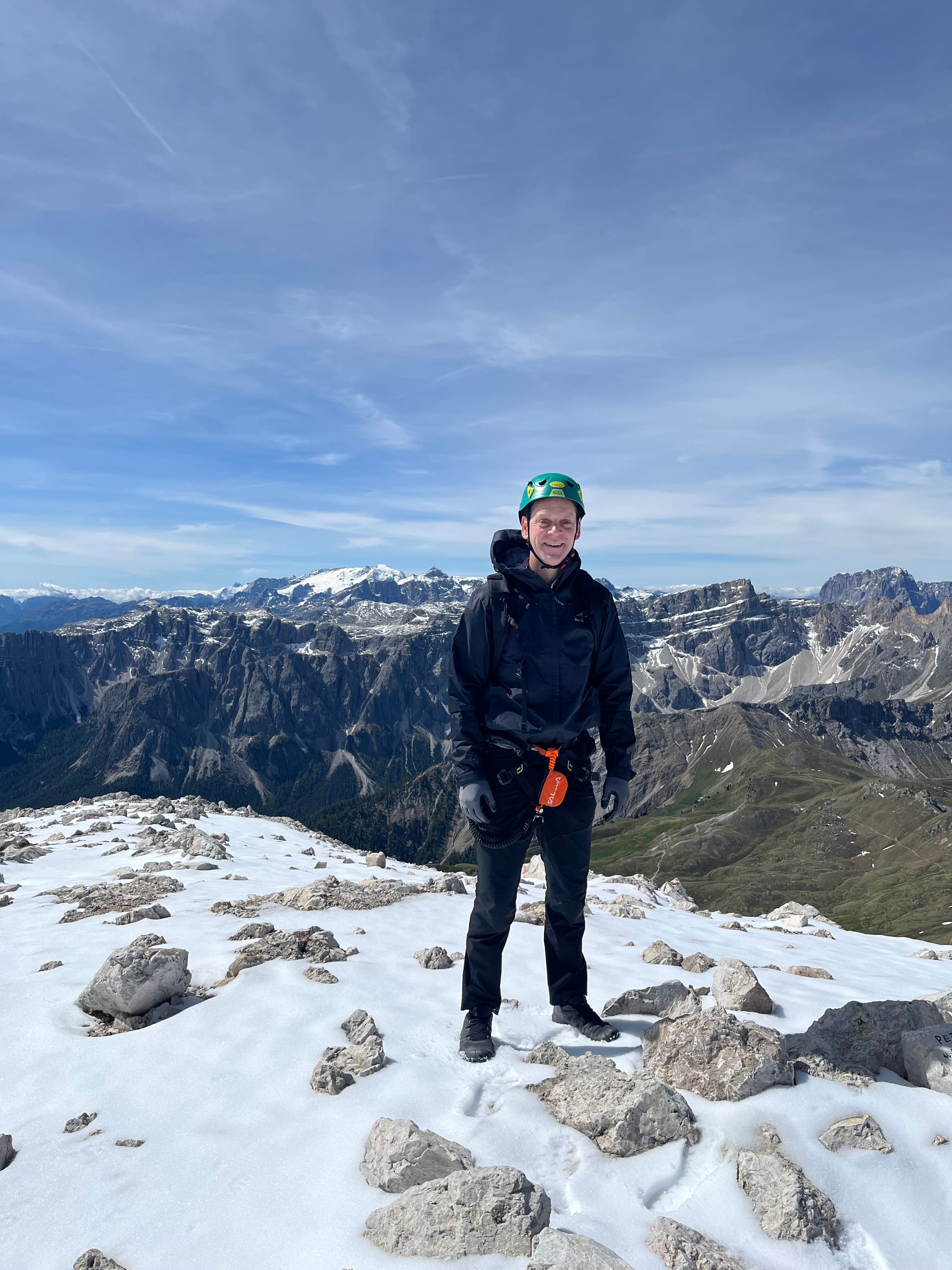
The reward at the top is categorically different from anything a normal trail delivers. You have accessed terrain that is simply unreachable any other way, and the summit makes that clear. On Sass de Putia, with the Marmolada Glacier to the south and the Austrian Alps to the north, the view is the best in South Tyrol. The route is graded A, the easiest possible classification, and is the right first via ferrata for anyone in solid hiking shape with a reasonable head for heights.
The Circuit, Day by Day
Day 1: Plose to Ütia de Börz (7.5 miles)
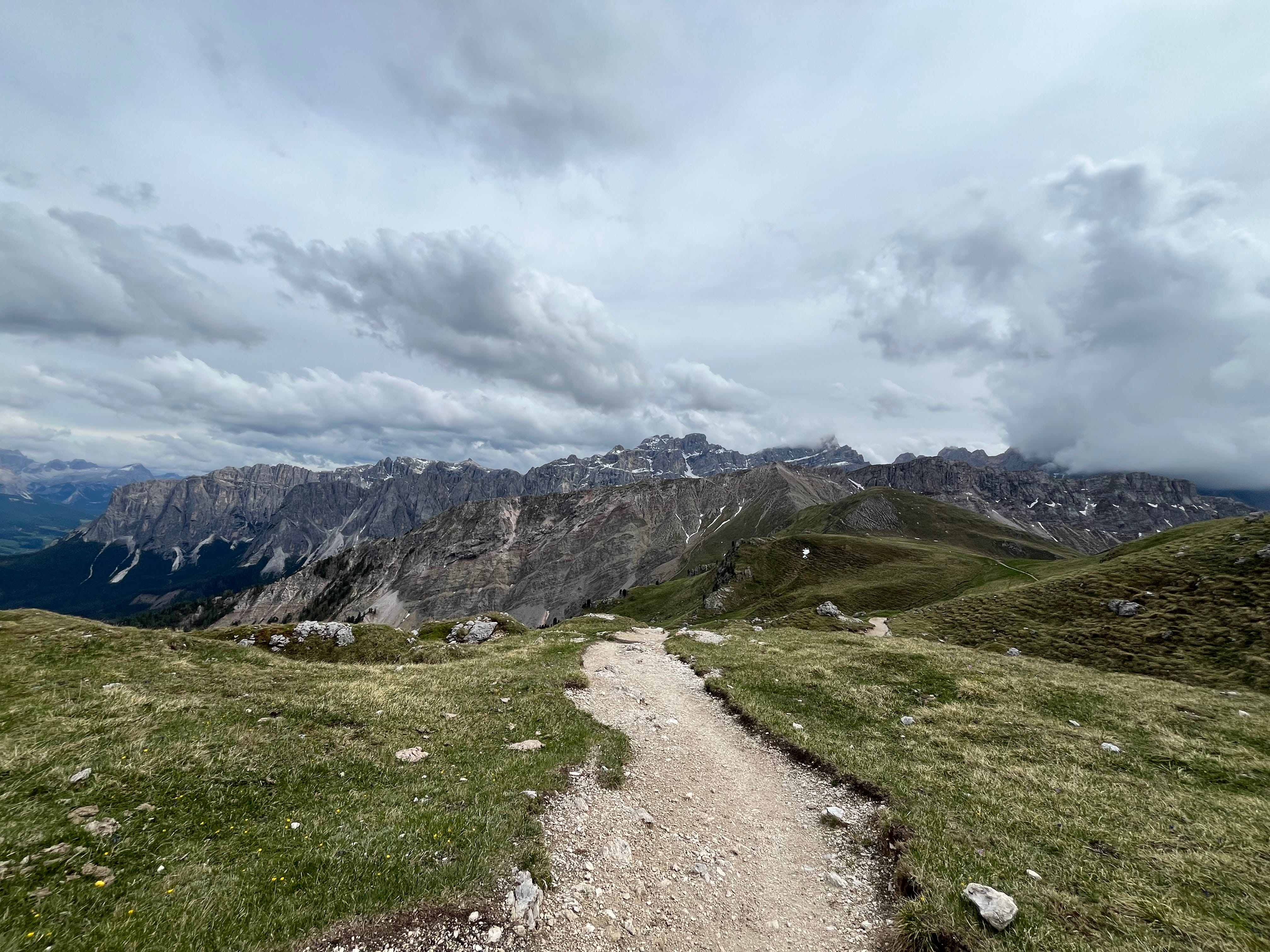
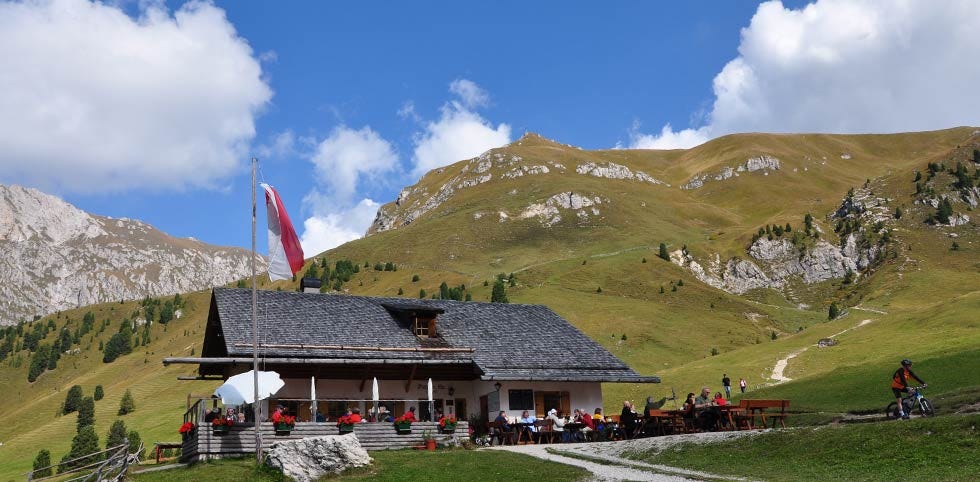
The day is a traverse, mostly shaded pine forest and sub-alpine meadow, with the limestone tower of Sass de Putia growing larger on the horizon as you move east. It is a warm-up day, deliberately. Mellow, beautiful, nothing to prove. Ütia de Börz is the best introduction to hut life you could ask for: mid-to-high end, easy access, champagne on arrival, and Via Ferrata gear available to rent for the next morning.
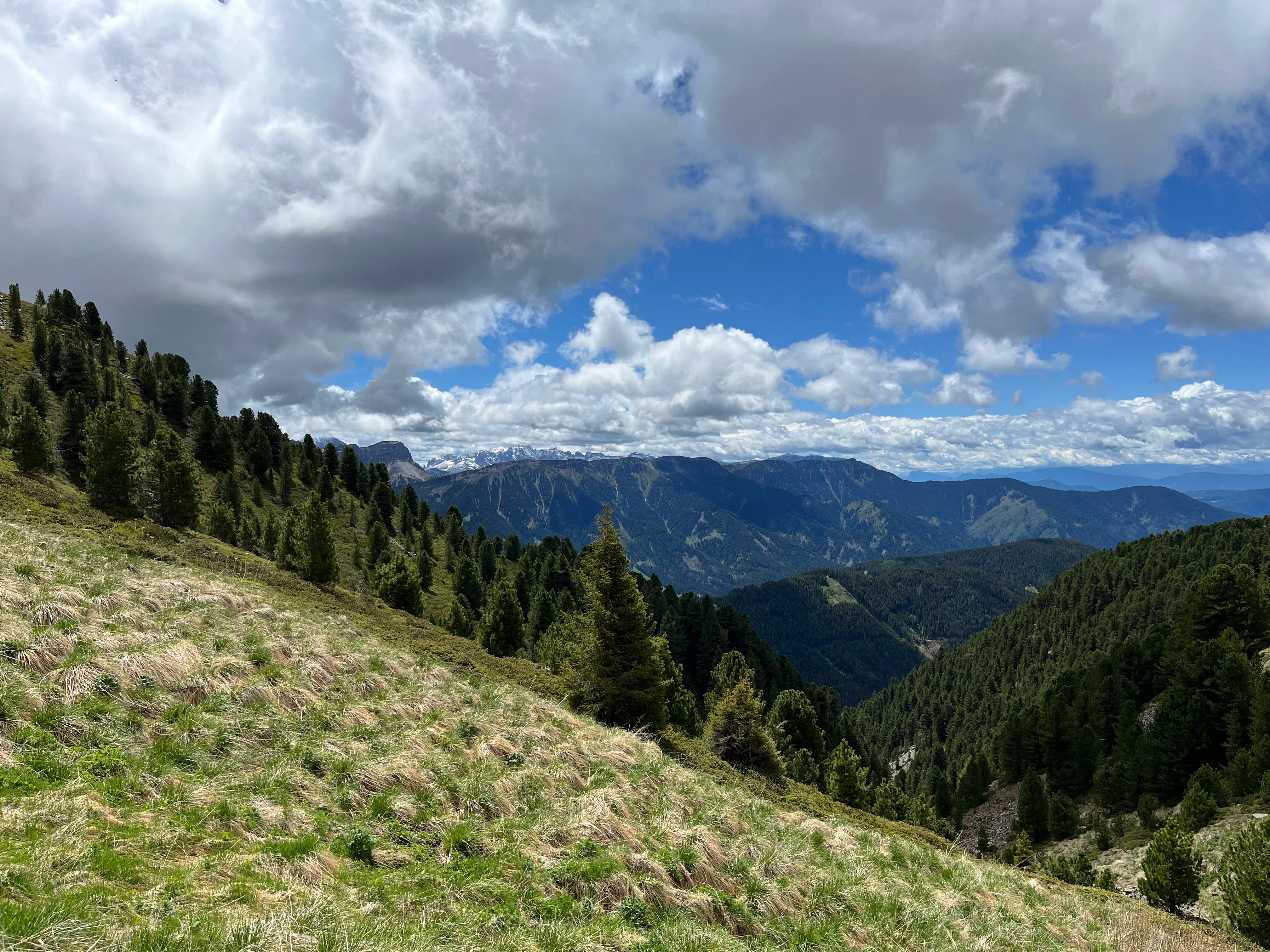
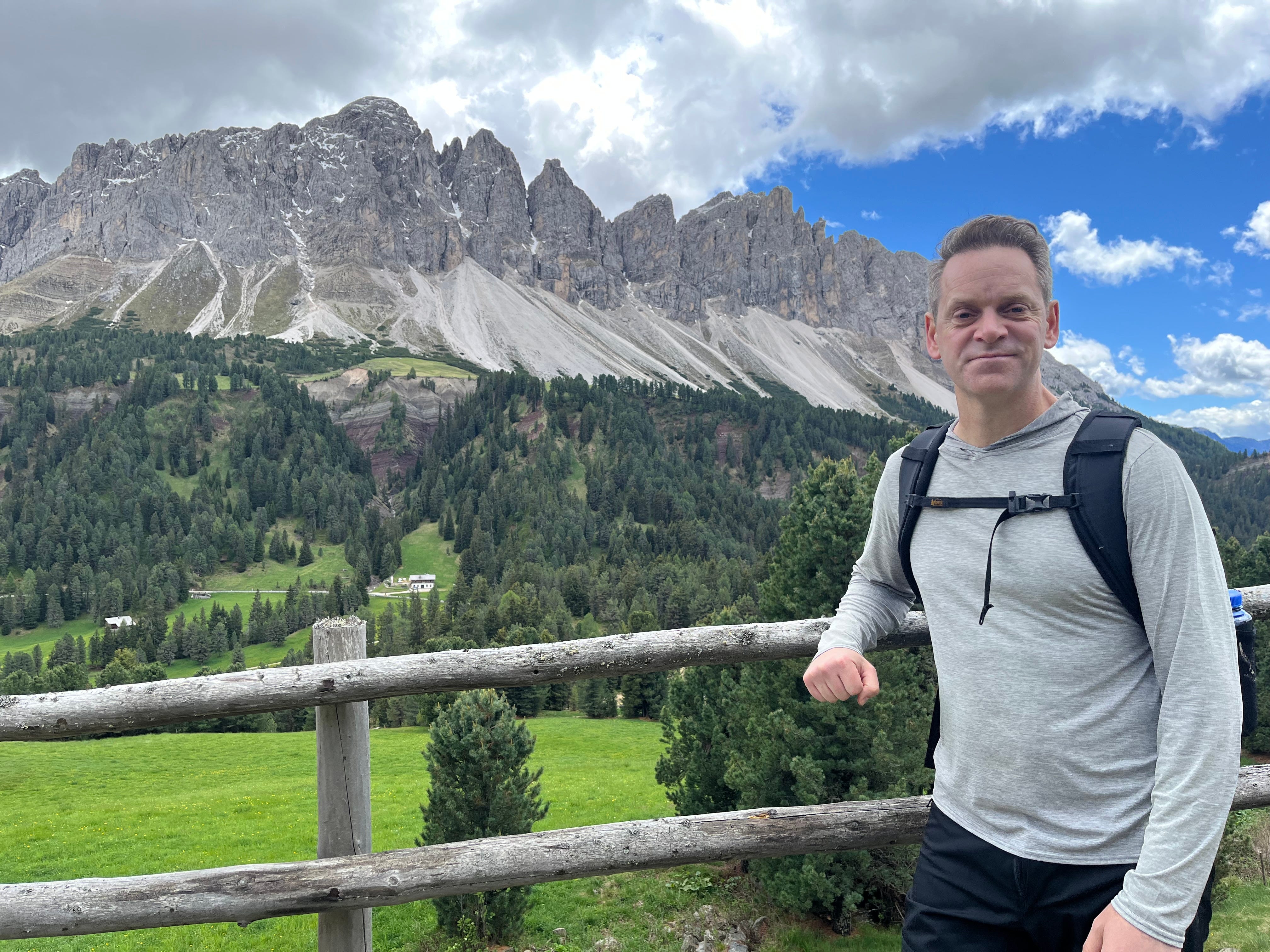
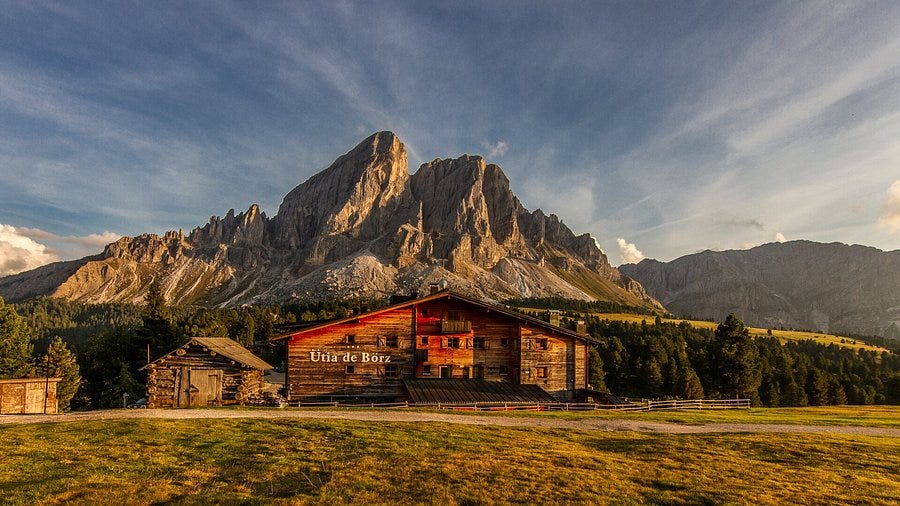
Day 2: Ütia de Börz to Gampen Alm via Sass de Putia (12.5 miles)
The biggest day on the circuit by a wide margin, and the one you’ll remember for years. It was shaped by a decision made before the trip: carry via ferrata gear for the entire circuit, or rent it for the day of the climb. The case for carrying it is simple. You have the gear when you need it and no route constraints. The case against is the weight. A harness, helmet, and lanyard add real bulk to a pack you are trying to keep light, and you carry it for three days you don’t use it. We chose the day rental. That choice had consequences.
Renting meant returning the gear to Ütia de Börz after the summit, which meant descending all the way back to the hut after the climb. And getting from Ütia de Börz to Gampen Alm requires crossing the Peitlerscharte saddle. There is no way around it. So we crossed it twice: once on the way up to the via ferrata, and again after lunch with tired legs and a full day already in them. Both crossings are significant vertical. Together they add up to around 5,000 feet of total gain.
From Ütia de Börz, Trail 8A climbs a vast green meadow to the Peitlerscharte saddle. From there, the route continues up steep limestone scree to the base of the summit block, where the cables begin. The via ferrata covers the final 350 feet. We reached the top in perfect conditions, two days after fresh snowfall, and stood there longer than we planned to.
Then we descended back to Ütia de Börz, returned the gear, ate lunch, and went back up over the pass. The second crossing hurt. Our legs were shot by the descent into the valley on the other side, but the approach to Gampen Alm from the north is gentle, and the Odle spires were coming into view. Aperol spritzes were waiting. Dinner was three courses. We were asleep before dark.
If you want to avoid the double crossing, carry the via ferrata kit for the full trip. It adds weight but saves a brutal second climb. We have no regrets, but we only understood what we’d signed up for in retrospect.
Day 3: Gampen Alm to Rossalm via Adolf Munkel Trail (9.9 miles)
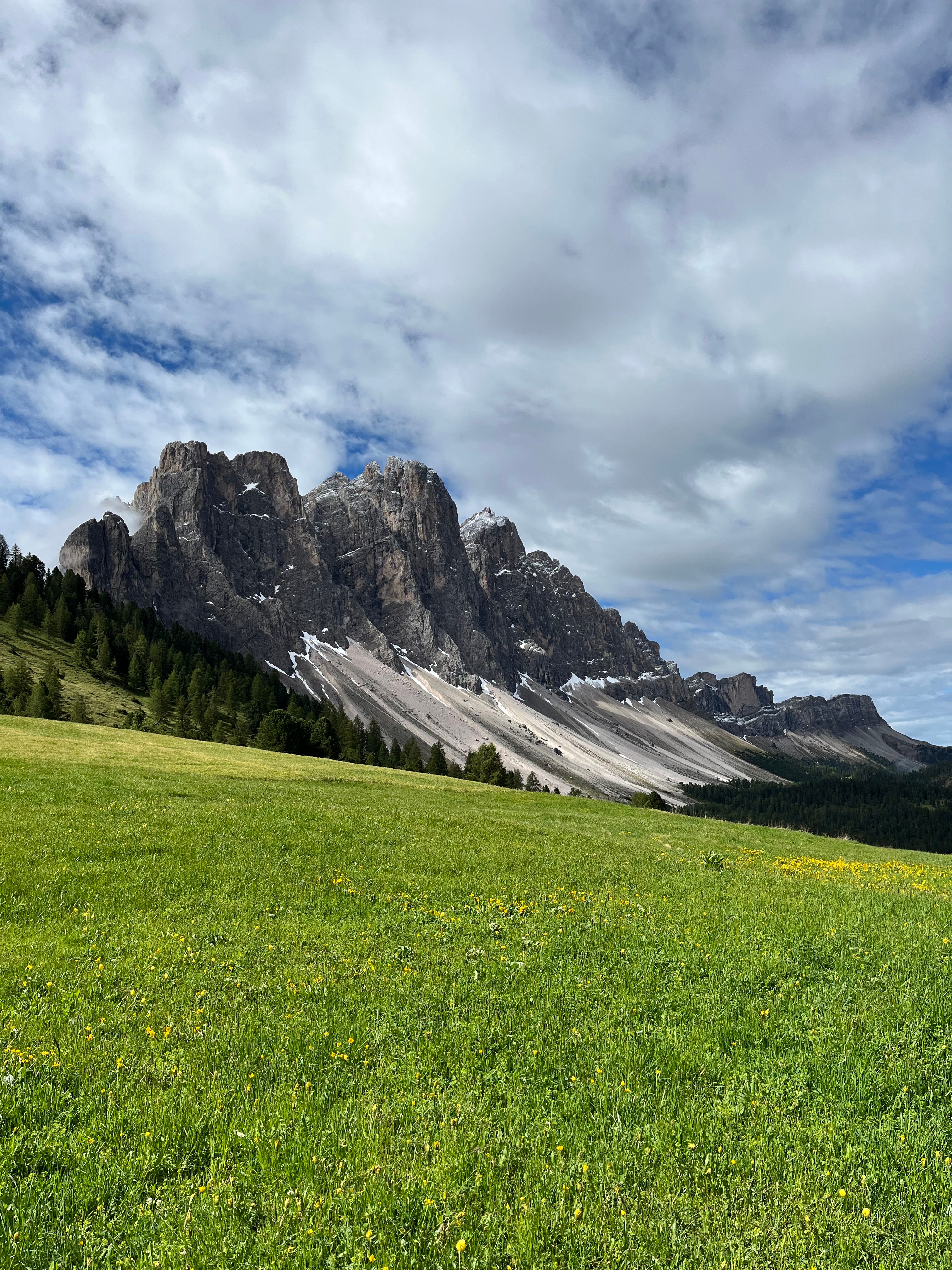
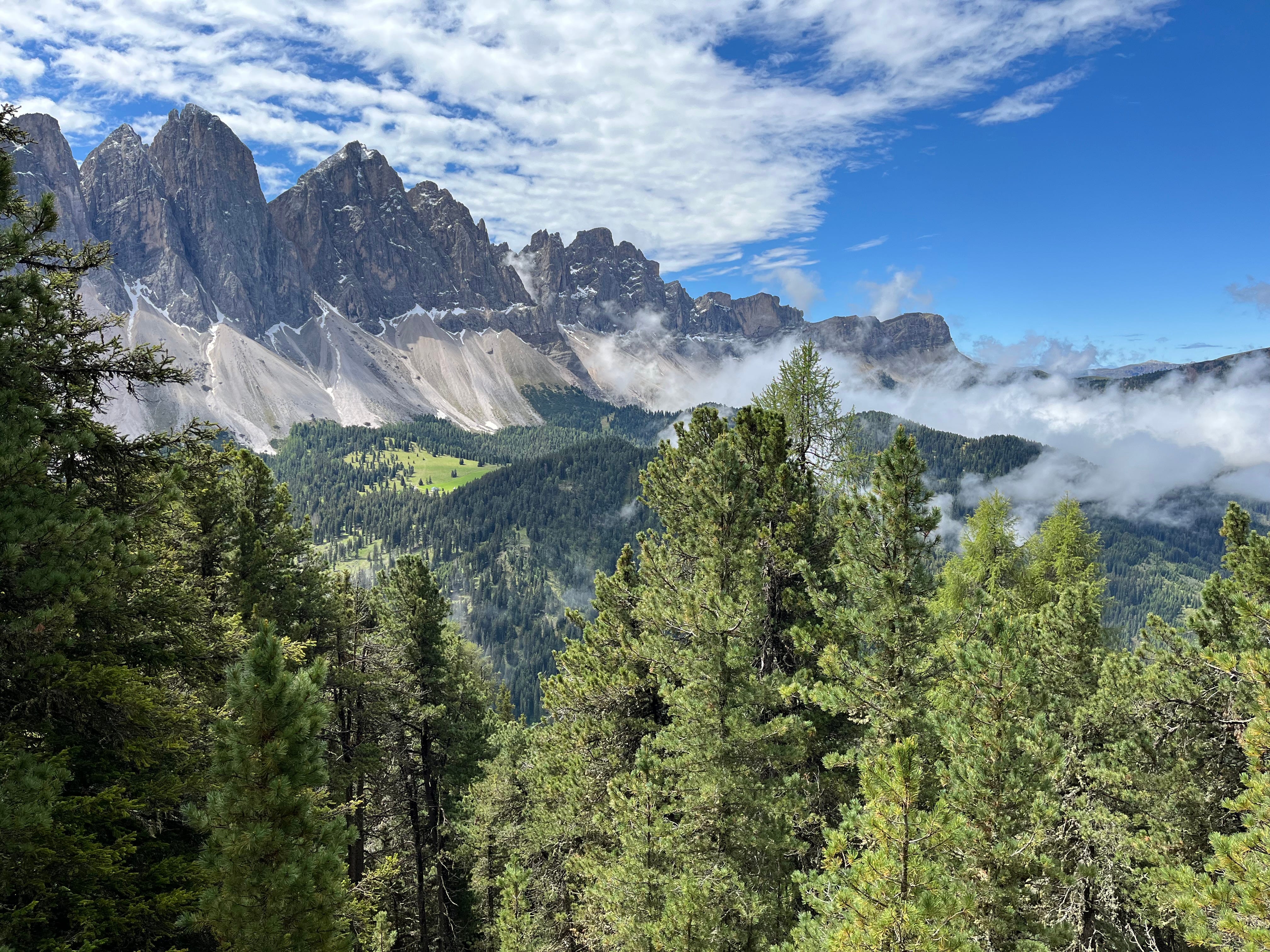
It was snowing when we woke up. We waited. By 10am the weather had moved through and we were moving. The morning starts with a steep uphill traverse out of the Gampen valley, then drops hard down to Zans, the lowest point on the circuit. What follows is the Adolf Munkel Trail, a long traverse directly beneath the Geisler/Odle spires, which rise some 3,000 vertical feet straight up from the forest floor and are among the most dramatic pieces of geology I've ever stood next to. Stop at the Edelweiss hut for a coffee and an apple strudel. This is not optional. Push on from there for another two hours to Rossalm, gaining elevation steadily until the hut appears above the treeline. Bathrobes and towels were waiting. The hot tub looked out at the valley. Dinner was five courses.
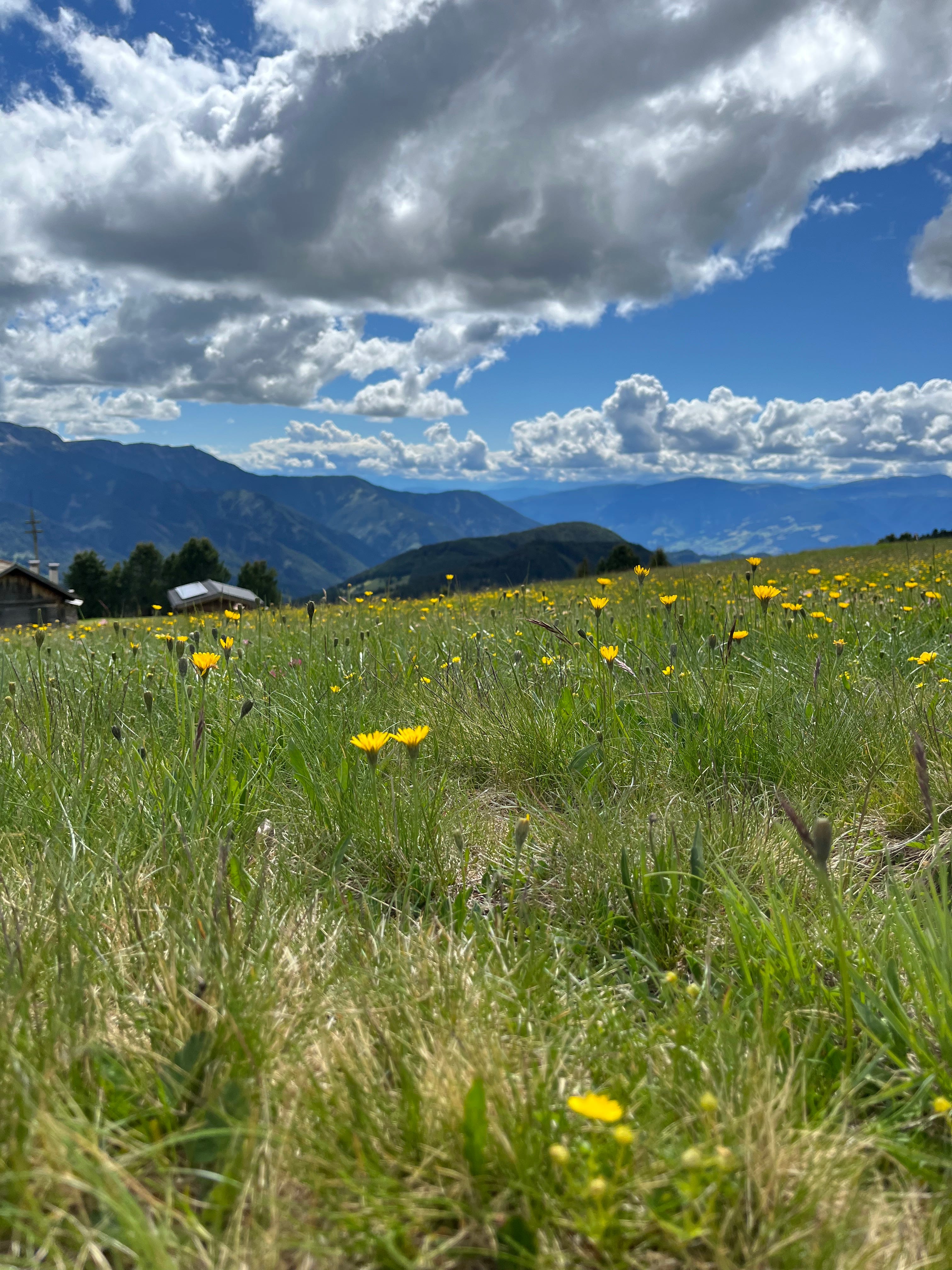
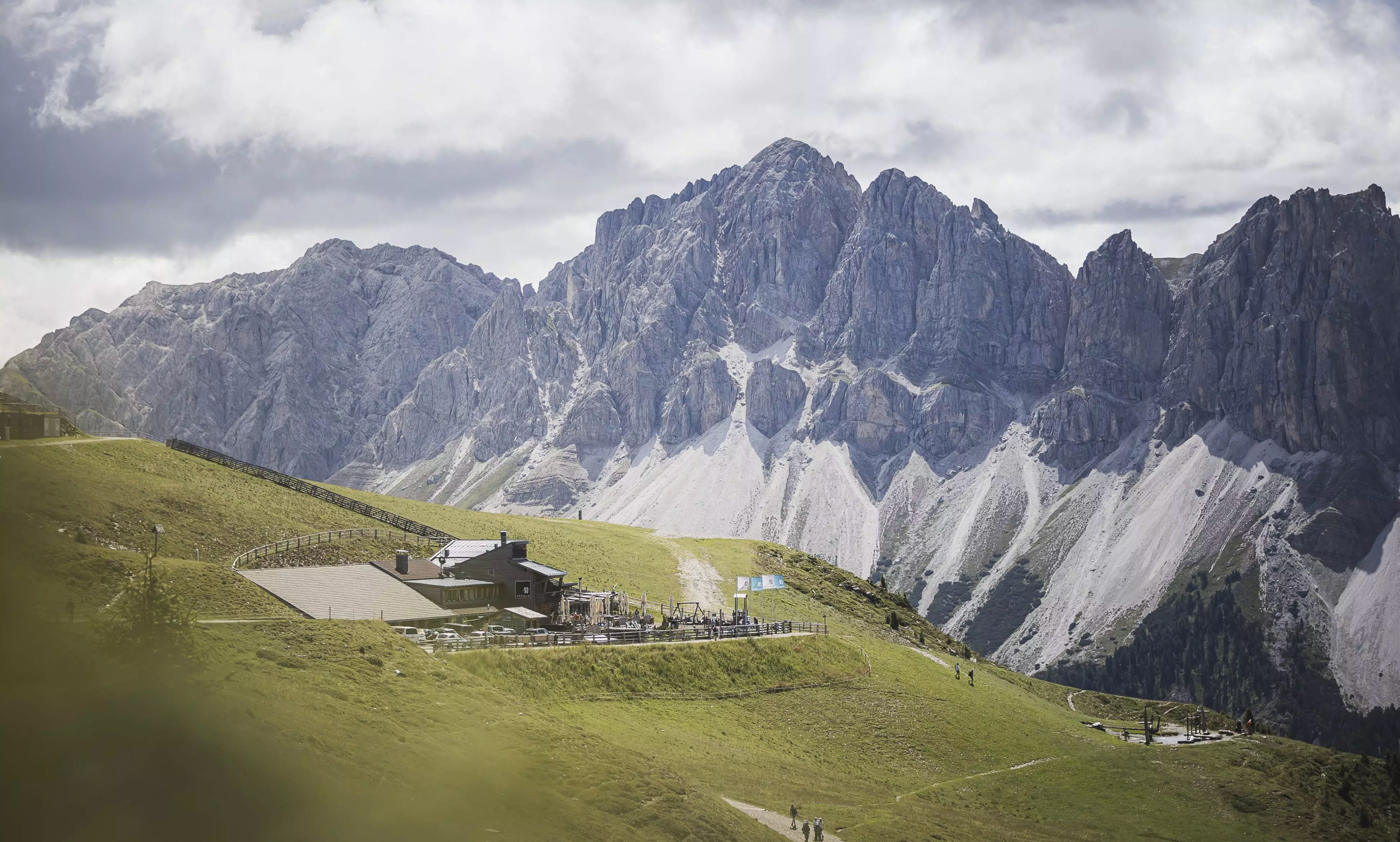
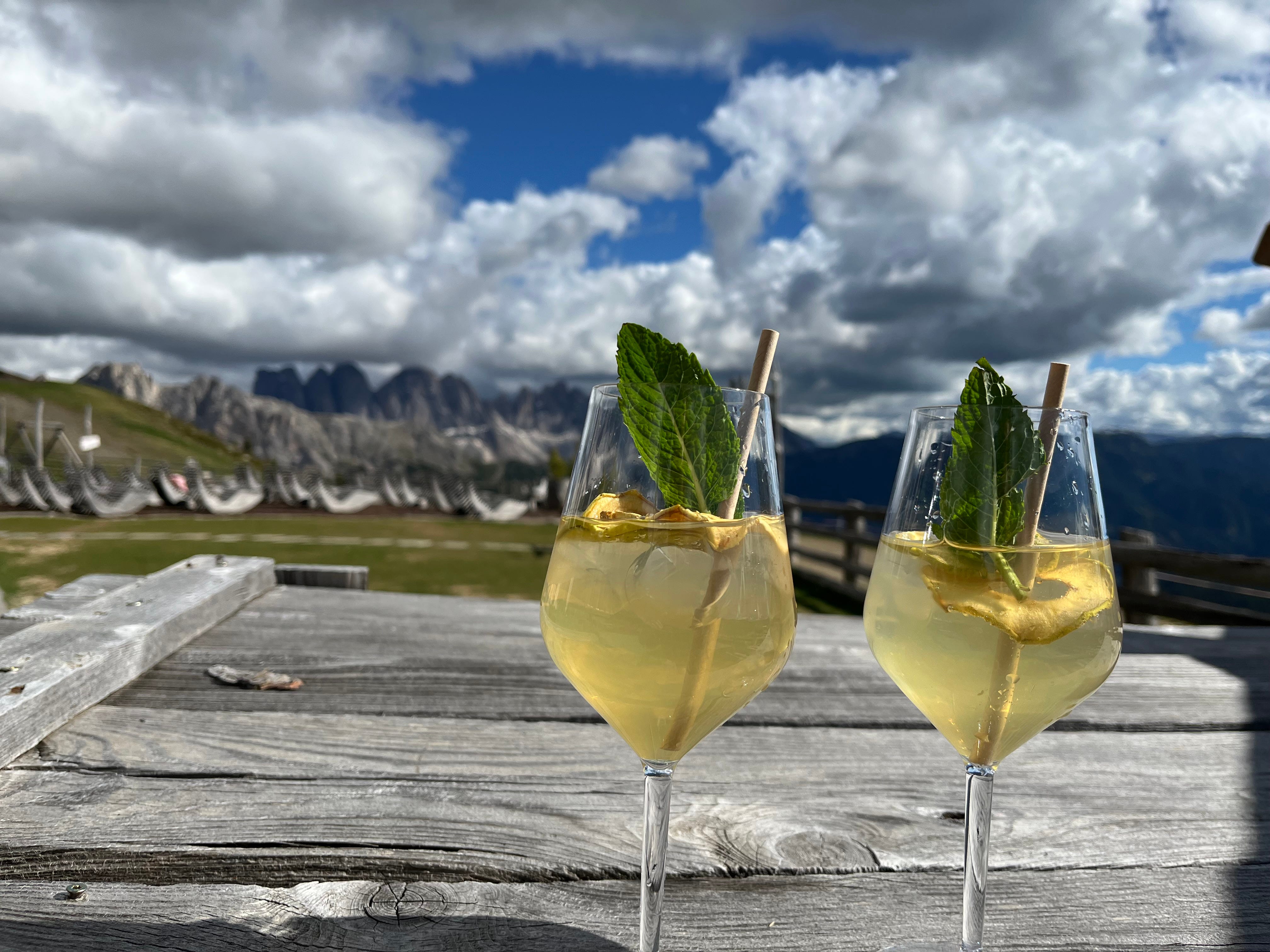
Day 4: Walk-Out to Forestis (2 miles)
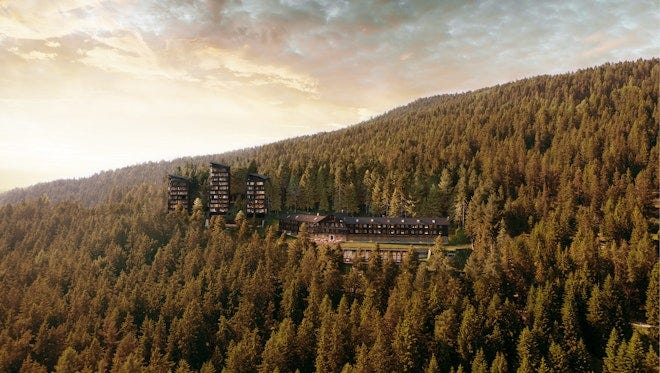
An hour of easy downhill to close the loop, and then the trip ends at a luxury alpine hotel. Forestis deserves its own full treatment, and I'll cover it separately. But the short version: the property is built entirely around a 180-degree panorama of Dolomites skyline, framed in white pine and glass, and every suite, every banquette, every sitting room faces the same direction. After four days on trail, dropping into the forest sauna at 95 degrees Celsius, then into a wooden cold plunge fed by a natural spring, then sitting down to Yera's eighteen-course tasting menu in a cave-like dining room that seats eighteen people, is an experience that earns the word unreasonable. The wilderness made it feel that way. That is the whole design of this trip.
Most trips make you choose: push hard or travel well. The Dolomites circuit refuses the choice. You summit a via ferrata peak, cross a high alpine pass twice in a day, walk beneath 3,000-foot limestone walls, and sleep in a real bed with a five-course dinner waiting. Adventure and luxury, in precise and perfect balance. That is the trip.
Excellent content, in addition to the already excellent Weekend Briefing. More of this!